

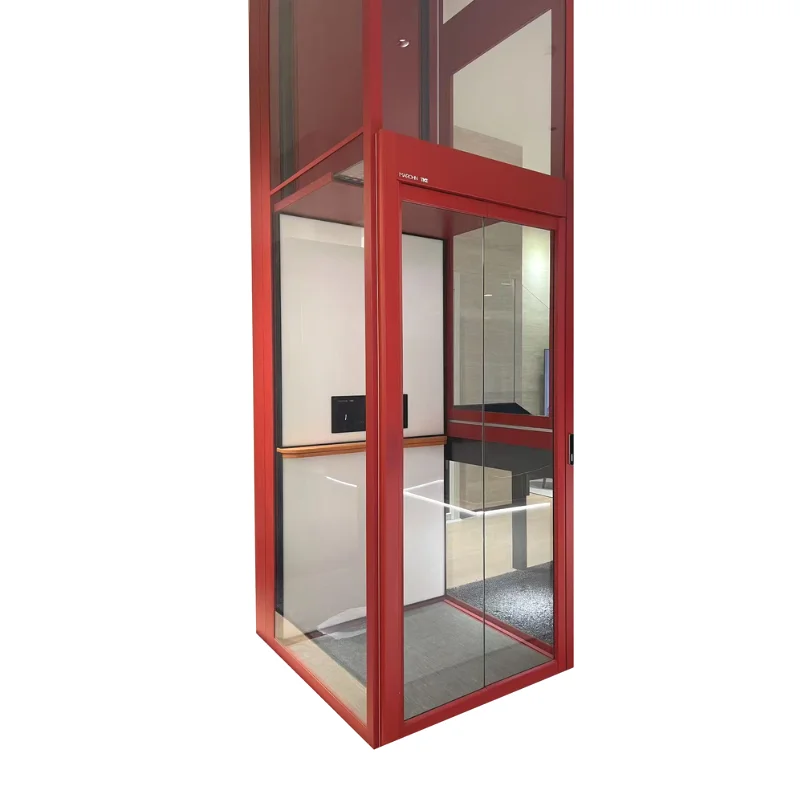
When homeowners begin exploring a home elevator solution, one of the first and most important decisions is whether the lift will be installed
indoors or outdoors. Both options can improve accessibility, comfort, and property value, but each comes with different
requirements for space, structural support, weather protection, installation complexity, maintenance, and long-term use.
This guide compares indoor home elevators and outdoor home elevators in a practical, SEO-friendly way. It is designed for
homeowners, architects, builders, renovators, and property developers looking for clear, industry-standard information about Residential Elevator
installation, home lift specifications, accessibility planning, and space-saving elevator solutions.
It does not recommend any specific brand or company. Instead, it focuses on general definitions, key differences, technical considerations, advantages,
standard specifications, and decision-making factors.
A home elevator is a vertical lifting system designed for residential use. It helps people move between floors safely and conveniently,
especially in multi-level houses, villas, townhomes, duplexes, and aging-in-place residences. Compared with commercial elevators, residential elevators
typically have smaller capacities, simpler controls, and design features tailored to private homes.
Modern home elevator solutions are used for:
An indoor home elevator is installed within the building envelope, usually inside an existing stairwell, closet space, corner shaft,
or a purpose-built vertical shaft. This type of residential elevator is integrated into the home’s interior layout and protected from external weather
conditions.
An outdoor home elevator is installed outside the main building structure, typically attached to an exterior wall or placed in a weather-protected
external shaft. Outdoor residential lifts are often used when interior space is limited or when homeowners want to avoid major interior remodeling.
The decision between an indoor and outdoor home elevator depends on space availability, building structure, budget, aesthetic goals, climate conditions,
and accessibility needs. The table below provides a clear comparison of the most important factors.
| Comparison Factor | Indoor Home Elevator | Outdoor Home Elevator |
|---|---|---|
| Location | Installed inside the home | Installed outside the home, usually attached to an exterior wall |
| Weather Protection | Natural protection from indoor environment | Requires weatherproof enclosure and exterior-grade components |
| Space Impact | Uses interior floor area and may require structural modification | Preserves indoor space, but needs exterior site access |
| Installation Complexity | May involve significant interior renovation | May involve exterior construction, foundation work, and façade integration |
| Design Flexibility | High interior customization options | Requires exterior visual coordination with the building façade |
| Maintenance Exposure | Lower exposure to weather-related wear | Higher exposure; weatherproofing and corrosion prevention are important |
| Best For | Homes with interior space and renovation flexibility | Homes with limited interior space or exterior installation access |
| Noise Consideration | May require sound insulation for indoor comfort | Outdoor placement can reduce indoor noise impact, depending on structure |
| Climate Suitability | Works well in most climates due to indoor placement | Must be engineered for local climate conditions |
| Long-Term Durability | Generally less exposed to environmental stress | Depends heavily on materials, seals, and preventive maintenance |
If the goal is to preserve interior square footage, an outdoor home elevator is often the more space-saving option. Because it is placed
outside the building, it reduces the need to sacrifice closets, hallways, or living space. This can be especially helpful in compact houses, narrow
townhomes, and properties where interior remodeling is limited.
However, an outdoor solution still requires enough exterior clearance, foundation planning, and proper alignment with each floor. If the exterior wall
layout is not suitable, an indoor elevator may be more practical despite its space requirements.
Both options can be visually attractive when properly planned. An indoor residential elevator can be designed as a luxury interior feature,
with glass panels, wood finishes, stainless steel, and custom cabin styling. It can become part of a modern home’s architectural identity.
An outdoor residential elevator can also look elegant if the enclosure is carefully integrated with the home façade. The design challenge
is to ensure the exterior shaft complements the house instead of appearing like an afterthought.
In general:
The installation process for a home elevator system depends on the building structure, elevator type, number of stops, shaft dimensions,
power supply, and local building codes. Proper planning is essential for safety, reliability, and long-term performance.
Residential elevator specifications vary by system type and manufacturer, but the following ranges are common in the home elevator industry. These figures
are useful for planning, comparison, and early-stage design. Always confirm final specifications with a qualified engineer or installer.
| Specification | Typical Range | Notes |
|---|---|---|
| Load Capacity | 250 kg to 500 kg | Common for 2 to 6 persons, depending on configuration |
| Travel Height | Up to 10 m or more | Varies by model, home height, and local code limits |
| Number of Stops | 2 to 4 stops common | Can vary for larger residences |
| Speed | 0.15 m/s to 0.4 m/s | Residential elevators are generally slower than commercial lifts |
| Shaft Size | Compact to medium | Depends on lift type and capacity |
| Power Supply | Single-phase or three-phase, depending on system | Electrical requirements should be verified during planning |
| Drive System | Hydraulic, traction, pneumatic, or screw-driven | Each system offers different benefits and maintenance needs |
| Door Type | Manual or automatic | Depends on the chosen system and accessibility needs |
| Cabin Finish | Customizable | Glass, metal, wood, laminate, and decorative options are common |
Performance is shaped by environment as much as by engineering. An indoor lift benefits from a stable temperature and protected operating conditions.
This often contributes to smoother long-term operation and lower weather-related wear.
An outdoor elevator can perform equally well if it is designed with suitable materials and protective systems. In this case, durability depends heavily on:
For homeowners in humid, coastal, snowy, or high-temperature regions, the outdoor elevator must be selected and installed with climate-specific engineering.
Without this, performance and service life can be affected.
Maintenance is one of the most important long-term considerations in any residential elevator solution. Both indoor and outdoor systems require
regular inspection, lubrication, safety testing, and component checks. However, outdoor elevators usually face more environmental stress.
| Maintenance Area | Indoor Elevator | Outdoor Elevator |
|---|---|---|
| Dust and Debris | Moderate exposure | Higher exposure, especially in open or semi-open sites |
| Moisture Control | Usually easier to manage | Critical for reliability and corrosion prevention |
| Temperature Variation | Stable indoor environment | May experience significant seasonal changes |
| Corrosion Risk | Lower | Higher, especially in coastal or humid climates |
| Inspection Frequency | Regular scheduled inspections | May require more frequent environmental checks |
| Component Protection | More naturally protected | Requires better enclosure and protective materials |
Whether choosing an indoor or outdoor home elevator, safety is non-negotiable. Residential elevator systems should comply with local building codes,
electrical standards, mechanical safety rules, and accessibility regulations. Because codes vary by country, state, and municipality, professional
design review is essential.
Common safety features may include:
Outdoor elevators may require additional attention to water resistance, lightning protection, drainage, sealed control systems, and wind load design.
Indoor elevators may need fire separation considerations, shaft ventilation, and acoustic control.
The price of a home elevator depends on the lift type, number of floors, custom design choices, structural work, and installation conditions. In general,
indoor and outdoor installations can both be cost-effective in the right setting, but each has different budget drivers.
A simple rule is that the lowest upfront cost is not always the best long-term value. Homeowners should consider installation cost, service life,
maintenance costs, energy use, and the impact on the home’s livability.
Energy efficiency is increasingly important in residential elevator selection. Many modern home lifts are designed to minimize power consumption through
efficient drive systems, standby modes, and optimized control logic.
Indoor elevators benefit from stable temperatures, which can improve operating comfort and reduce climate-related strain. Outdoor elevators may require
extra insulation or environmental control, depending on the region. If an outdoor unit is well-engineered, energy performance can still be strong, but
enclosure quality becomes more important.
Before choosing between an indoor and outdoor home elevator, review the following checklist to identify the best fit for your property and lifestyle:
| Question | If Yes, Consider |
|---|---|
| Do you want to preserve indoor living space? | Outdoor home elevator solution |
| Do you have available interior space for a shaft? | Indoor home elevator solution |
| Is your climate harsh, wet, or highly corrosive? | Indoor installation may be easier to protect |
| Do you want to avoid major interior remodeling? | Outdoor installation may be more practical |
| Do you want a custom interior design feature? | Indoor elevator |
| Do you have exterior access and proper setback space? | Outdoor elevator |
For homeowners and industry professionals researching residential accessibility systems, the following terms are commonly used in planning,
specification, and SEO content:
The choice between indoor and outdoor home elevator solutions depends on how the home is built, how much space is available, and what
the homeowner values most. Indoor elevators are often preferred for climate protection, interior design integration, and long-term environmental stability.
Outdoor elevators are often preferred for space-saving, retrofit convenience, and reduced interior disruption.
There is no universally “best” choice. The ideal residential elevator solution is the one that balances space, safety, aesthetics, budget, maintenance,
accessibility, and code compliance. For new construction, an indoor elevator may be easier to integrate from the start. For renovation projects, an outdoor
elevator may be the most practical path to adding vertical mobility without compromising interior living space.
If you are planning a home elevator installation, comparing indoor and outdoor options early in the design process can help you save time,
reduce costly changes, and select a system that performs well for years. With careful planning, either option can become a reliable, attractive, and
valuable part of a modern home.
```
เว็บไซต์นี้ใช้คุกกี้เพื่อให้แน่ใจว่าคุณได้รับประสบการณ์ที่ดีที่สุดบนเว็บไซต์ของเรา
 English
 Indonesia
 Tiếng Việt
 Filipino



 โทรศัพท์
ความคิดเห็น
(0)