

Introduction
A Traction Gantry Home Elevator Compact is a space-efficient Residential Elevator designed for houses, villas, duplexes, self-built homes, and other multi-floor residential buildings where available installation space is limited. By combining traction elevator technology with a compact gantry structure, this type of home elevator provides convenient vertical transportation while making efficient use of the available building area.
As modern residential architecture continues to focus on efficient space utilization, homeowners increasingly need elevators that can provide accessibility without requiring a large amount of dedicated space. A compact traction gantry home elevator can be an effective solution for this requirement. It can connect multiple floors and make everyday movement easier for families, elderly residents, children, and people carrying luggage or household items.
The compact design does not simply mean reducing the physical size of the elevator. A properly engineered compact elevator considers the relationship between cabin dimensions, shaft space, door opening, traction system, guide rails, gantry structure, machine arrangement, and building layout. The objective is to create an elevator system that provides practical passenger capacity while minimizing unnecessary space consumption.
A Traction Gantry Home Elevator Compact can be designed for both new construction and selected renovation projects. Depending on the building structure, the elevator may be installed inside a dedicated shaft, beside a staircase, near an entrance, or in another suitable location. Certain configurations may also be adapted for outdoor residential applications.
For homeowners, choosing a compact elevator requires more than comparing product dimensions. Important factors include the number of floors, required capacity, available installation space, travel height, door configuration, structural conditions, electrical requirements, safety systems, and local elevator regulations.
1. What Is a Traction Gantry Home Elevator Compact?
A Traction Gantry Home Elevator Compact is a residential elevator that uses a traction drive system and a compact supporting gantry structure.
In a traction system, a motor-driven traction machine moves the elevator through a mechanical traction arrangement. The elevator cabin travels along guide rails while the counterweight and traction components help balance the system.
The gantry structure provides a supporting framework for the elevator components. Its configuration can be engineered according to the available architectural space and project requirements.
A typical compact traction gantry home elevator may include:
Elevator cabin
Traction machine
Gantry structure
Guide rails
Counterweight
Traction ropes
Landing doors
Cabin door
Controller
Control panel
Safety gear
Limit switches
Door safety devices
Emergency alarm
Emergency lighting
Overspeed protection
Backup power components
The exact equipment depends on the elevator model, technical design, capacity, building structure, and applicable standards.
The main objective is to provide reliable vertical transportation while using space efficiently.
2. Typical Specifications
The specifications of a compact traction gantry home elevator vary according to the application. A customized configuration is often required because residential buildings have different floor heights, shaft dimensions, and architectural layouts.
Product Type | Compact Traction Gantry Home Elevator |
Application | Residential / Villa / Duplex |
Drive Type | Traction |
Structure | Gantry |
Capacity | Approximately 250–450 kg |
Passenger Capacity | Approximately 2–6 Persons |
Floors | Commonly 2–6 Floors |
Speed | Customized According to Project |
Cabin Size | Customized |
Shaft Size | Customized |
Travel Height | Customized |
Door Type | Manual or Automatic Configuration |
Installation | Indoor / Selected Outdoor Applications |
Cabin Materials | Stainless Steel / Glass / Customized Materials |
Control System | Elevator Control System |
Power Supply | According to Local Requirements |
Safety System | Multiple Safety Protection Devices |
Interior Design | Customized |
These values are general reference ranges and should not be treated as fixed specifications for every product.
Before manufacturing, the manufacturer should confirm the actual capacity, speed, cabin dimensions, shaft dimensions, motor requirements, structural loads, travel height, door configuration, and safety requirements.
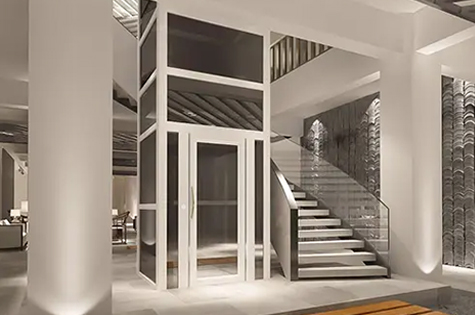
3. Why Compact Design Matters in Home Elevators
Space is one of the biggest challenges when installing an elevator in a residential building.
A commercial elevator system may be too large for a private home. A conventional elevator can also require significant shaft and equipment space.
A compact home elevator focuses on efficient use of available space.
For example, homeowners may need to preserve space for:
Living rooms
Bedrooms
Staircases
Corridors
Kitchens
Bathrooms
Storage
Balconies
Parking areas
Outdoor landscaping
A compact elevator design can help reduce the impact of elevator installation on these areas.
However, compact should not mean compromising essential safety or engineering requirements. The cabin, doors, guide rails, structural frame, and safety clearance must still meet the applicable technical requirements.
4. Key Features of Traction Gantry Home Elevator Compact
The most important characteristic is efficient use of installation space.
The gantry structure can be designed around the building's available dimensions, allowing the elevator to be integrated into different residential layouts.
This makes the system particularly attractive for villas and existing houses where space is limited.
The traction system provides the lifting force required to move the cabin between floors.
Compared with some other elevator technologies, traction systems offer a mature mechanical operating principle and can be configured for different residential applications.
The motor, traction machine, ropes, counterweight, and control system work together to provide controlled vertical movement.
A Compact Residential Elevator can be configured according to the required passenger capacity and available space.
A smaller cabin may be suitable for compact residential buildings, while a larger cabin can provide greater passenger comfort.
The goal is to achieve a balance between cabin usability and building space.
Door location and opening dimensions are important in compact elevator projects.
Depending on the building design, the door can be configured to match the entrance and landing layout.
Proper door planning can help make the elevator easier to integrate into existing architecture.
Residential elevators should include appropriate safety protection.
Depending on the configuration, safety features can include:
Door interlock
Emergency stop
Overspeed protection
Mechanical safety gear
Upper and lower limit protection
Door obstruction protection
Emergency lighting
Alarm system
Backup power
Safety switches
The actual safety system should comply with the applicable local regulations and certification requirements.
A compact elevator does not need to look industrial.
The cabin can be customized to complement the interior design of a villa or private home.
Possible materials include:
Stainless steel
Glass
Aluminum
Painted metal
Decorative panels
Wood-style finishes
Lighting, flooring, handrails, control panels, and ceiling designs can also be customized.
5. Advantages of Compact Traction Gantry Home Elevators
The main advantage is space efficiency.
Homeowners who do not have room for a large conventional elevator system can consider a compact configuration.
The elevator can be designed according to the actual building layout rather than relying on a single standard size.
A home elevator can significantly improve accessibility between floors.
This is particularly valuable for elderly residents, people with limited mobility, families with young children, and users who regularly carry heavy items.
Using stairs several times each day can become inconvenient in a multi-story home.
A compact elevator provides an alternative way to move between floors, making bedrooms, offices, storage rooms, and living areas easier to access.
Existing homes often have limited options for elevator installation.
A compact gantry configuration can be considered when homeowners want to add an elevator without making major changes to the overall building layout.
A professional site survey is essential before deciding whether the installation is structurally feasible.
Every home has different dimensions.
Customization can cover:
Capacity
Cabin size
Door size
Door position
Travel distance
Number of floors
Interior materials
Exterior structure
Control system
Lighting
Safety configuration
This flexibility helps the elevator fit individual residential requirements.
Modern residential traction elevators can provide controlled acceleration and deceleration.
A properly configured system can offer a comfortable ride while minimizing unnecessary vibration and noise.
Actual ride comfort depends on mechanical design, installation accuracy, guide rail alignment, motor control, and maintenance.
6. Applications
Compact villas with two or more floors can benefit from an elevator that occupies limited space.
The elevator can connect bedrooms, living rooms, kitchens, and other important areas.
Although compact elevators are designed for space efficiency, they can also be used in larger villas when the homeowner prefers a smaller elevator footprint.
The cabin can be customized according to passenger requirements.
A Compact Traction Home Elevator can connect the primary floors of a duplex residence.
It can provide easier access for family members and reduce the need for frequent stair use.
Self-built houses often have unique floor plans.
A customized traction gantry elevator can be designed around the available structural conditions.
Older homes may not have an elevator shaft.
A compact elevator solution can be evaluated as part of a renovation project, provided that structural, electrical, safety, and regulatory requirements can be satisfied.
For homeowners planning long-term residence, accessibility is an important consideration.
Installing an elevator can make upper floors easier to access and may allow residents to remain in their multi-story home for longer.
Compact traction elevators can also be used in private residential buildings where efficient vertical transportation is needed without installing a large commercial elevator system.
7. How to Select the Right Compact Home Elevator
Choosing the correct elevator starts with understanding the building.
Determine how many floors the elevator will serve.
The number of stops affects the control system, travel distance, installation requirements, and overall project design.
Consider the number of passengers who will normally use the elevator.
For example, a compact cabin may be sufficient for one or two users, while families may prefer a higher-capacity configuration.
Accurate measurements should include:
Available shaft width
Shaft depth
Floor-to-floor height
Overhead space
Pit conditions
Door opening area
Machine space
Structural support area
These measurements help engineers determine the most suitable configuration.
Determine whether the elevator will be installed:
Indoors
Outdoors
Inside a dedicated shaft
Beside a staircase
Near a balcony
Along an exterior wall
Outdoor applications require additional consideration of weather protection and structural conditions.
8. Installation Process
Professional installation is essential for a safe and reliable home elevator.
Technicians first inspect the building and collect measurements.
They should evaluate the proposed elevator location, structural support, electrical supply, floor height, door positions, and installation access.
Based on the site conditions, engineers develop the elevator layout.
The design should specify:
Cabin dimensions
Shaft dimensions
Gantry position
Guide rail position
Door locations
Machine location
Electrical connections
Safety clearances
The building is prepared according to the approved installation drawings.
This may involve creating openings, installing support structures, preparing foundations, or constructing a suitable shaft.
The gantry structure is installed and accurately aligned.
Structural stability and vertical alignment are critical.
Guide rails are installed and adjusted.
Accurate guide rail alignment contributes to smooth cabin movement.
The traction machine, ropes, counterweight, sheaves, and related components are installed.
The elevator cabin, landing doors, cabin doors, control panels, lighting, and interior components are installed.
The controller, sensors, switches, buttons, alarm, emergency lighting, and other electrical equipment are connected.
The complete elevator system must be tested before use.
Testing may cover:
Door operation
Leveling
Emergency stop
Safety gear
Limit switches
Alarm system
Load performance
Ride operation
Electrical protection
The elevator should only be placed into service after professional commissioning and any required local inspection or approval.
9. Usage Instructions
Correct operation helps protect both passengers and equipment.
Press the landing call button and wait for the cabin.
Do not enter until the cabin has arrived and the doors have opened correctly.
Enter carefully and remain within the cabin.
Avoid blocking the doors.
Press the appropriate floor button.
Do not repeatedly press multiple buttons unless necessary.
Remain inside the cabin while it is moving.
Do not attempt to open the doors manually.
Children should be appropriately supervised when using the elevator.
Do not allow children to play with the control panel or doors.
Ensure luggage and household items do not block the doors or exceed the rated capacity.
If an emergency stop button is provided, use it only when necessary.
If the elevator stops unexpectedly, remain calm and use the alarm or emergency communication function.
Do not attempt to climb out of the elevator independently.
10. Maintenance Guide
Regular maintenance is essential for safe and reliable operation.
Technicians should inspect the traction machine, motor, brake, bearings, and related components.
Where applicable, ropes should be inspected for wear, corrosion, deformation, and other signs of deterioration.
Guide rails should remain correctly aligned and securely fixed.
Door locks, sensors, tracks, and opening mechanisms should be checked regularly.
The controller, wiring, switches, sensors, control buttons, lighting, and other electrical components should be inspected.
Safety systems should be tested according to the manufacturer's maintenance instructions and local regulations.
The cabin and landing areas should be kept clean.
Avoid allowing water or corrosive substances to enter electrical or mechanical components.
11. Factors Affecting Compact Home Elevator Price
The price of a Traction Gantry Home Elevator Compact depends on the technical configuration and installation conditions.
Important factors include:
Elevator capacity
Number of floors
Travel height
Cabin dimensions
Shaft dimensions
Traction machine
Gantry structure
Door configuration
Interior materials
Control system
Safety equipment
Installation complexity
Building modifications
Transportation
Local certification
A compact elevator does not automatically mean the lowest total project cost.
For example, a renovation project may require additional structural work even if the elevator itself is relatively small.
Therefore, buyers should compare the complete project cost rather than only the equipment price.
12. Customization Options
Customization is particularly important for residential elevator applications.
The cabin can be designed according to available space and required capacity.
Different door styles and opening arrangements may be available depending on the system.
Homeowners can select finishes that match their architectural style.
LED ceiling lighting and decorative lighting can improve cabin visibility and appearance.
The control panel can be configured according to the elevator's functions and design requirements.
For certain installations, the external gantry or enclosure can be customized to integrate with the building.
The elevator cabin and external structure can be customized in different finishes where technically appropriate.
13. Compact Traction Elevator vs. Hydraulic Home Elevator
Both traction and hydraulic technologies can be used for residential elevators, but their operating principles are different.
Drive Technology | Traction | Hydraulic |
Main Lifting Method | Traction Machine | Hydraulic Cylinder |
Structure | Gantry Configuration | Hydraulic Structure |
Space Planning | Can be compact | Depends on cylinder and equipment |
Energy Use | Depends on configuration | Depends on hydraulic system |
Application | Residential / Villa | Residential / Villa |
Customization | High | High |
Maintenance | Requires mechanical/electrical maintenance | Requires hydraulic and mechanical maintenance |
The best choice depends on the building, required travel distance, available space, capacity, budget, and local technical requirements.
14. Important Safety Considerations
Safety should be considered throughout the entire elevator lifecycle.
Before purchasing a compact traction elevator, buyers should verify:
Manufacturer qualifications
Product documentation
Applicable certifications
Safety equipment
Installation requirements
Maintenance support
Spare parts availability
Warranty conditions
Local regulatory compliance
The elevator should be installed by qualified professionals.
Users should never bypass safety switches or attempt unauthorized repairs.
If abnormal noise, vibration, door behavior, leveling problems, or other unusual conditions occur, the elevator should be inspected by qualified technicians.
15. Frequently Asked Questions
It is a compact residential elevator that combines traction drive technology with a gantry-style supporting structure. It is designed to provide vertical transportation while making efficient use of available residential space.
Yes. It can be suitable for villas, duplex homes, self-built houses, and other multi-floor residences where space efficiency is important.
The number of floors depends on the elevator design. Residential configurations commonly serve several floors, but the actual number should be determined according to travel height, building structure, local regulations, and the selected model.
There is no universal dimension because cabin and shaft sizes vary according to capacity, design, door configuration, and structural conditions.
A site survey is required to determine the appropriate dimensions.
Yes. Many residential elevator systems can be customized in terms of cabin size, capacity, travel height, door arrangement, materials, interior appearance, and control configuration.
Potentially yes. A compact traction gantry elevator can be considered for some renovation projects, but structural feasibility must be evaluated by qualified professionals.
A properly designed, installed, inspected, and maintained elevator can provide safe residential transportation. Safety depends on the complete system, including structural installation, mechanical components, electrical controls, doors, and safety devices.
Yes. Residential elevators can improve accessibility and reduce the need for elderly residents to use stairs.
The cabin should be designed with appropriate dimensions and controls for the intended users.
Some configurations may be suitable for outdoor installation. Outdoor elevators require appropriate structural protection, weather resistance, electrical protection, drainage, and compliance with local regulations.
The requirement depends on the specific traction system and product design. Some modern residential traction configurations can reduce or eliminate the need for a conventional machine room.
The manufacturer should confirm the exact installation requirements.
Maintenance frequency should follow the manufacturer's recommendations and applicable local regulations. Regular professional inspections are important for detecting wear and maintaining safety systems.
Capacity, floors, travel distance, cabin size, structural work, traction machine, doors, materials, control system, safety equipment, installation, transportation, and certification can all affect the final price.
Yes. Space efficiency is one of the primary reasons homeowners consider compact residential elevator systems.
However, the building must still provide sufficient space for the cabin, structure, doors, equipment, and required safety clearances.
Yes, provided that the luggage and passengers remain within the elevator's rated capacity and do not obstruct the doors or interfere with safety systems.
Useful information includes:
Number of floors
Floor-to-floor height
Required capacity
Desired cabin size
Available shaft dimensions
Door location
Installation location
Indoor or outdoor application
Preferred materials
Project location
Architectural drawings
Providing accurate information allows the manufacturer to prepare a more suitable technical proposal.
16. Conclusion
A Traction Gantry Home Elevator Compact is a practical solution for residential buildings where space efficiency, accessibility, and reliable vertical transportation are important. Its traction drive system and gantry-based structure can be engineered for a wide variety of villas, duplexes, self-built houses, and renovation projects.
The compact design makes efficient use of available space while allowing homeowners to customize important factors such as capacity, cabin dimensions, door configuration, travel height, materials, control systems, and appearance.
The best compact home elevator is not necessarily the smallest elevator available. Instead, it is the system that achieves the right balance between cabin usability, structural requirements, safety, comfort, installation space, energy consumption, maintenance, and overall project cost.
Before purchasing a compact traction gantry elevator, homeowners should conduct a professional site survey and confirm the required dimensions, load capacity, number of floors, travel height, electrical requirements, structural conditions, safety equipment, and local compliance requirements.
With appropriate engineering, professional installation, regular maintenance, and correct operation, a compact traction gantry home elevator can significantly improve the functionality and accessibility of a multi-floor residence while preserving valuable living space.
 RELATED
 RELATED
เว็บไซต์นี้ใช้คุกกี้เพื่อให้แน่ใจว่าคุณได้รับประสบการณ์ที่ดีที่สุดบนเว็บไซต์ของเรา
 English
 Indonesia
 Tiếng Việt
 Filipino



 โทรศัพท์