

Introduction
A Traction-type Backpack Home Elevator Residential system is a compact vertical transportation solution designed for private houses, villas, duplexes, multi-story residences, and residential renovation projects. It combines a traction drive system with a backpack-type structural arrangement, helping create a practical elevator solution where conventional elevator layouts may be difficult to install.
Residential buildings increasingly require convenient vertical access. Families may need an elevator for elderly people, children, people with limited mobility, or simply for improving comfort between floors. However, traditional passenger elevators can require considerable shaft space, deep pits, overhead structures, or dedicated machine rooms. A traction-type backpack home elevator can provide a more flexible alternative for residential applications.
The backpack configuration positions the traction mechanism and supporting components in a compact arrangement, which can be particularly useful when the available installation area is limited. Depending on the building design and selected configuration, the elevator can be installed indoors or outdoors and adapted to villas, self-built houses, renovated homes, duplex residences, attic levels, balconies, or other vertical-access locations.
The system can be customized according to building height, travel distance, rated load, cabin dimensions, landing arrangement, door configuration, installation environment, and architectural requirements. Typical applications include two- to five-floor residential buildings, although the actual number of stops and travel height should always be determined through engineering assessment.
For homeowners, architects, contractors, and elevator distributors, understanding the structure, specifications, installation requirements, operating principles, safety features, and maintenance considerations is essential before selecting a residential traction-type Backpack Elevator.
A traction-type backpack home elevator uses an electric traction machine to move the elevator cabin through a traction system consisting primarily of the drive machine, traction sheave, ropes or belts, counterweight arrangement, guide rails, control system, and safety components.
The term backpack-type generally describes a configuration in which the cabin is supported and guided from one side rather than using a conventional centered shaft arrangement. This design can help reduce the structural space required around the cabin and may offer greater flexibility for residential buildings with unusual layouts.
Unlike hydraulic Residential Elevators, traction systems do not depend on hydraulic cylinders to directly lift the cabin. Instead, an electric motor drives the traction mechanism. This can provide efficient operation and make traction technology suitable for repeated daily residential use.
A typical residential system consists of:
Elevator cabin
Traction machine
Traction sheave
Guide rails
Suspension ropes or belts
Counterweight
Controller
Landing doors
Cabin door
Safety gear
Overspeed protection
Limit switches
Emergency stop system
Emergency lighting
Backup power components where specified
Control buttons and indicators
The exact configuration depends on the manufacturer, building conditions, applicable regulations, and project requirements.
2. Typical Technical Parameters
The technical parameters of a residential traction-type backpack elevator should be customized according to the building and intended application.
Product Type | Traction-Type Backpack Home Elevator |
Application | Residential |
Drive Type | Electric Traction |
Installation | Indoor or Outdoor |
Floors | Commonly 2–5 Floors |
Rated Load | Approximately 250–450 kg, depending on design |
Capacity | Commonly 2–5 Persons |
Speed | Customized according to project requirements |
Control | Microcomputer / PLC-Based Control |
Door Type | Manual or Automatic |
Cabin | Customized |
Guide System | Guide Rails |
Drive System | Traction Machine |
Power Supply | Project Dependent |
Structure | Backpack-Type Configuration |
Installation | New Construction or Renovation |
Customization | Size, Load, Height, Cabin and Door Configuration |
Safety | Multiple Safety Protection Systems |
These figures are indicative rather than universal specifications. The final rated load, speed, cabin size, shaft dimensions, motor power, power supply, travel height, and other technical parameters should be confirmed in the elevator design.
Rated load determines how much weight the elevator is designed to carry safely. Residential models may be configured for smaller passenger groups than commercial elevators.
For example, a compact system may be designed around a 250–450 kg load range. The appropriate capacity depends on cabin size, building requirements, intended users, and local elevator regulations.
Residential traction elevators are frequently used in two-, three-, four-, and five-floor homes. The required travel distance is more important than the number of floors alone because floor-to-floor height varies between buildings.
Residential elevators generally prioritize smoothness, quietness, comfort, and safety rather than high-speed transportation. The appropriate speed should be selected according to travel height, building structure, local regulations, and user requirements.
The cabin can be customized according to available space. A compact cabin is useful for smaller residential buildings, while larger cabins may be selected where wheelchair access, luggage transportation, or higher passenger capacity is required.
3. Main Features
The backpack-type configuration can help optimize the relationship between the elevator cabin and the supporting structure. This is especially useful in homes where architectural space is limited.
Instead of requiring a large conventional elevator arrangement, the structural configuration can be designed around the available building space.
The traction system uses an electric motor and traction mechanism to move the elevator. Compared with hydraulic lifting systems, traction technology provides a different mechanical solution that can be well suited to multi-floor residential applications.
A home elevator should provide smooth starting, acceleration, deceleration, leveling, and stopping. Proper control programming helps reduce sudden movement and improves passenger comfort.
Depending on the project design, a traction-type backpack elevator may be installed:
Inside the house
Outside the building
Beside a staircase
Near a balcony
Along an external wall
In a residential extension
In a villa
In a duplex
In a self-built house
During home renovation
The actual installation method must be determined by structural conditions and professional engineering design.
Residential elevators are often integrated into the architectural design of the building. Cabin finishes, door styles, lighting, handrails, control panels, glass elements, stainless steel surfaces, and other decorative options can be selected according to the project.
Safety is a fundamental consideration for any residential elevator. Depending on the system configuration, safety features may include:
Overspeed protection
Safety gear
Door interlocks
Emergency stop
Upper and lower limit protection
Overload protection
Emergency lighting
Emergency alarm
Manual emergency release
Backup power
Automatic leveling protection
The exact safety configuration should comply with the regulations applicable to the installation country or region.
4. Advantages of a Traction-Type Backpack Home Elevator Residential System
One of the primary advantages is the potential to optimize installation space. Residential properties often have smaller floor plans than commercial buildings, making compact elevator structures especially valuable.
The backpack arrangement can provide greater flexibility when the elevator needs to be positioned close to a wall or existing architectural structure.
Installing an elevator in an existing home can be challenging because the original building was not necessarily designed for elevator construction.
A Compact Residential Elevator can be considered during:
Home remodeling
Villa renovation
Accessibility upgrades
Extension projects
Multi-generation housing improvements
A professional survey is necessary to determine whether the existing structure can support the proposed elevator.
For families living across multiple floors, carrying groceries, luggage, household items, or other objects using stairs can be inconvenient. A residential elevator provides an alternative method of moving between floors.
It can also improve accessibility for elderly family members and people with mobility limitations.
Residential projects vary considerably. A standardized commercial elevator may not fit every home. A customizable traction-type backpack elevator can be designed around different:
Floor heights
Travel distances
Cabin sizes
Landing positions
Door directions
Architectural styles
Installation locations
Traction technology can provide efficient vertical movement for residential use. Properly designed systems can offer smooth operation while keeping routine energy consumption under control.
An elevator can make a multi-story home easier to use. In addition to accessibility benefits, it can improve convenience for daily transportation and potentially increase the functional appeal of a villa or high-end residential property.
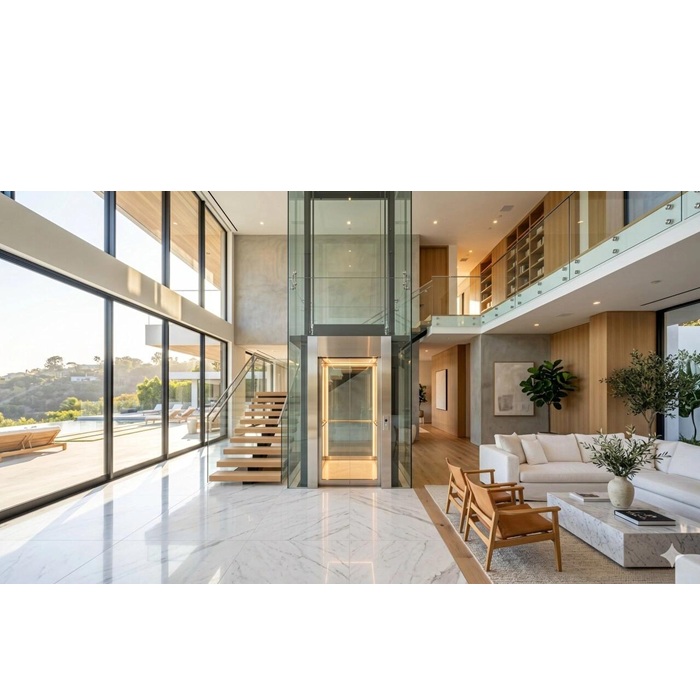
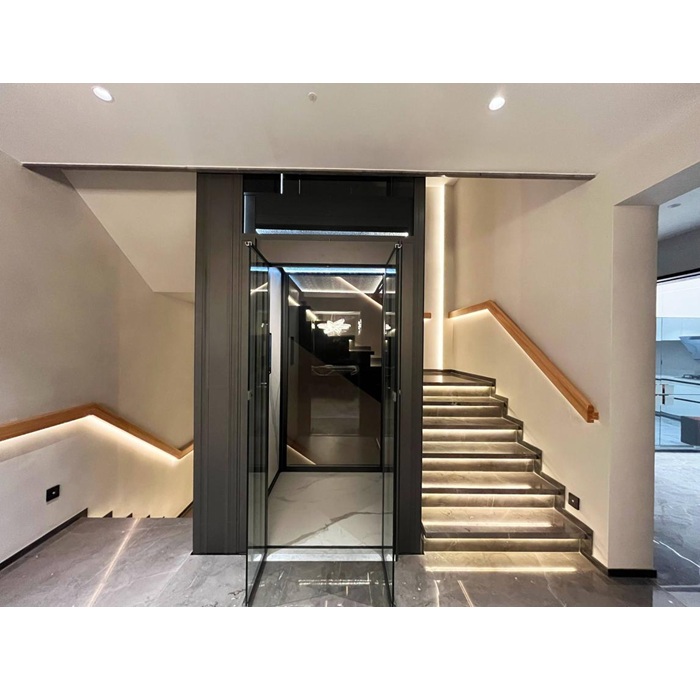
5.1 Private Villas
Large villas frequently contain multiple floors and may benefit from a dedicated residential elevator. A backpack-type configuration can be adapted to architectural layouts where conventional elevator installation would consume excessive space.
A duplex home can use a compact elevator to connect the main living areas. This can improve convenience when bedrooms, kitchens, living rooms, or recreational spaces are distributed between floors.
Self-built residential properties often have unique floor plans. A customizable elevator can be designed according to the actual building dimensions.
Existing homes can be upgraded with elevators during renovation. External installation can sometimes be considered when internal space is insufficient, subject to planning and structural requirements.
Multi-story houses may become difficult to navigate as residents age. Installing an elevator can reduce dependence on stairs and make important residential areas more accessible.
Where the attic or loft is used as a bedroom, office, storage area, or recreational room, a residential elevator can provide convenient vertical access.
For certain residential layouts, an external elevator positioned near balconies or external corridors can provide an alternative access route. Weather protection and corrosion resistance become important considerations for outdoor installations.
6. Indoor and Outdoor Installation
Indoor installation offers several advantages:
Protection from weather
More stable operating conditions
Easier integration with interior architecture
Reduced exposure to rain and sunlight
Easier temperature and moisture management
However, indoor installation requires sufficient structural and architectural space.
Outdoor installation can be useful when the interior layout does not provide enough room for an elevator.
Potential locations include:
External walls
Garden-side extensions
Balcony areas
Building entrances
Staircase sides
Outdoor systems require suitable weather-resistant materials, drainage, sealing, lighting, and electrical protection.
The elevator structure should also be designed for local wind, rain, temperature, humidity, and other environmental conditions.
7. Installation Requirements
Before purchasing a traction-type backpack home elevator, a professional site survey should be conducted.
Important factors include:
The installer needs to evaluate walls, floors, beams, columns, foundations, and other load-bearing components.
The proposed position should provide suitable access to each required floor while minimizing interference with doors, windows, staircases, utilities, and living areas.
The total vertical travel must be measured accurately from the lowest landing to the highest landing.
Each floor needs appropriate landing access. Door dimensions and opening directions must be coordinated with the building layout.
The required power supply depends on the elevator motor, controller, lighting, door system, and other electrical components.
For outdoor elevators, local environmental conditions should be considered during structural and material selection.
Elevator installations must comply with applicable building codes, elevator standards, electrical regulations, accessibility requirements, inspection procedures, and permitting requirements.
8. How to Use a Residential Traction Backpack Elevator
Operating a home elevator is generally straightforward.
Press the landing call button and wait for the elevator to arrive.
After the landing door opens completely, enter the cabin carefully.
Press the required floor button on the cabin control panel.
The elevator will accelerate, travel, decelerate, and stop at the selected floor.
After the cabin reaches the destination and the doors open completely, exit the elevator.
Users should:
Observe the rated load
Avoid overloading the cabin
Keep doors unobstructed
Do not force doors open
Keep children supervised
Avoid jumping inside the cabin
Keep liquids away from electrical controls
Report abnormal sounds or movement
Follow emergency instructions
9. Maintenance Requirements
Regular maintenance is essential for safe and reliable operation.
A professional maintenance program should inspect:
Check the traction machine, traction sheave, suspension components, lubrication where applicable, and mechanical connections.
Inspect guide rails, brackets, fasteners, and alignment.
Check door panels, locks, sensors, rollers, and opening and closing performance.
Inspect the controller, wiring, terminals, switches, sensors, and control panel.
Safety equipment should be tested according to applicable standards and manufacturer requirements.
Inspect lighting, emergency communication equipment, buttons, handrails, flooring, and interior panels.
For outdoor installations, inspect corrosion protection, drainage, waterproofing, structural connections, and exposed electrical components.
10. How to Select the Right Residential Traction Backpack Elevator
Choosing an elevator should not be based on price alone.
Determine how many floors require elevator access and the total travel distance.
Decide whether the elevator will normally carry one or two people or whether wheelchair and larger passenger requirements must be accommodated.
The available installation area should be measured before selecting cabin dimensions.
Indoor and outdoor systems have different structural and material requirements.
Door position and opening direction can significantly affect the building layout.
Make sure the proposed elevator includes appropriate safety systems and complies with local regulations.
A residential elevator should fit the building rather than forcing the building to accommodate an unsuitable standard design.
11. Traction-Type Backpack Home Elevator vs. Hydraulic Home Elevator
Both traction and hydraulic systems can be used for residential applications, but their operating principles are different.
Drive Principle | Electric traction | Hydraulic pressure |
Main Lifting Method | Traction machine and suspension system | Hydraulic cylinder |
Typical Application | Multi-floor residential buildings | Residential and low-rise applications |
Energy Characteristics | Efficient during suitable operating conditions | Depends on hydraulic system |
Structural Configuration | Backpack traction arrangement | Cylinder-based arrangement |
Installation Flexibility | High with suitable structural design | High for certain low-rise layouts |
Maintenance | Traction and electrical components | Hydraulic and electrical components |
Customization | High | High |
The best choice depends on the building structure, travel height, installation space, required capacity, local regulations, and project budget.
12. Common Problems and Troubleshooting
Possible causes include:
Power failure
Emergency stop activated
Door not properly closed
Controller fault
Safety circuit interruption
Users should not attempt to bypass safety devices. Contact qualified maintenance personnel.
Remain calm and use the emergency communication or alarm function. Do not attempt to climb out of the cabin or force the doors open.
Professional rescue procedures should be followed.
Check whether an object is blocking the door area. If the problem continues, stop using the elevator and contact maintenance personnel.
Unusual noise may indicate mechanical wear, alignment problems, loose components, or other faults. Professional inspection is recommended.
Possible causes can include guide system issues, mechanical wear, improper adjustment, or control-related problems. The elevator should be inspected rather than continuously operated under abnormal conditions.
13. Frequently Asked Questions
It is a residential elevator that combines electric traction technology with a backpack-type structural configuration. It is designed to provide vertical transportation in private houses, villas, duplexes, and other residential buildings.
The number of floors depends on the elevator design, travel distance, building structure, and local requirements. Residential configurations are commonly designed for low-rise homes such as two- to five-floor buildings.
Yes. Villas are one of the main applications for compact residential elevators, particularly when multiple floors need convenient vertical access.
It can potentially be installed in an existing home, but a professional structural and architectural assessment is required before installation.
Yes, depending on the product design and local conditions. Outdoor installations require appropriate weather-resistant construction and electrical protection.
The requirement depends on the specific elevator design. Many modern residential traction systems are designed with compact equipment arrangements, but the exact machine-room configuration should be confirmed with the manufacturer.
Yes. Cabin dimensions can often be customized according to available space, rated load, accessibility requirements, and project conditions.
Yes. A residential elevator can provide convenient vertical transportation for elderly residents, especially in multi-story homes.
Traction technology can provide efficient operation when appropriately designed. Actual energy consumption depends on motor capacity, elevator speed, travel frequency, load, control technology, and standby consumption.
The elevator requires periodic professional inspection and maintenance. The maintenance frequency depends on usage, manufacturer recommendations, local regulations, and system design.
The appropriate capacity depends on the number of users, cabin dimensions, accessibility requirements, and building conditions. Smaller residential models may use capacities around 250–450 kg, but the final specification should be professionally calculated.
Yes. Compact residential elevators are particularly useful where installation space is limited. The cabin, doors, structure, and control configuration can potentially be adapted to the available space.
Safety requirements vary by jurisdiction and elevator type. Typical systems include door interlocks, overspeed protection, safety gear, limit protection, overload protection, emergency lighting, emergency alarm, and emergency communication.
Yes. The elevator can be engineered according to the actual floor-to-floor dimensions. Accurate site measurements are necessary before manufacturing.
Yes. Renovation is a common application for residential elevators, provided the building can accommodate the required structural and electrical modifications.
14. Why Choose a Customized Residential Solution?
A residential elevator is not simply a standalone machine. It must work together with the building structure, electrical system, landing layout, user requirements, and local regulations.
A customized traction-type backpack home elevator can be designed around the specific requirements of the project. This approach helps address differences in:
Building dimensions
Number of floors
Travel height
Cabin size
Rated load
Door arrangement
Installation location
Indoor or outdoor environment
Architectural style
Accessibility requirements
For homeowners, customization can help maximize available space. For contractors and distributors, it can provide a broader range of solutions for different residential projects.
15. Conclusion
A Traction-Type Backpack Home Elevator Residential system provides a flexible solution for improving vertical accessibility in villas, duplexes, self-built houses, renovated homes, and other multi-story residential buildings. Its combination of traction drive technology and backpack-type structural design can help address space limitations while providing comfortable and convenient transportation between floors.
The most important factors when selecting a residential elevator include rated load, travel height, number of floors, cabin dimensions, installation space, door configuration, power supply, safety equipment, environmental conditions, maintenance requirements, and compliance with local regulations.
For new construction and renovation projects, professional site measurement and engineering design should be completed before manufacturing or installation. A properly selected and maintained residential traction elevator can provide long-term convenience while supporting accessibility and improving the functionality of multi-story homes.
For manufacturers, suppliers, contractors, and homeowners, the ideal solution is not necessarily the largest or most powerful elevator. Instead, it is the system that provides the right balance of space efficiency, safety, comfort, reliability, customization, and residential practicality for the specific building.
เว็บไซต์นี้ใช้คุกกี้เพื่อให้แน่ใจว่าคุณได้รับประสบการณ์ที่ดีที่สุดบนเว็บไซต์ของเรา
 English
 Indonesia
 Tiếng Việt
 Filipino



 โทรศัพท์