

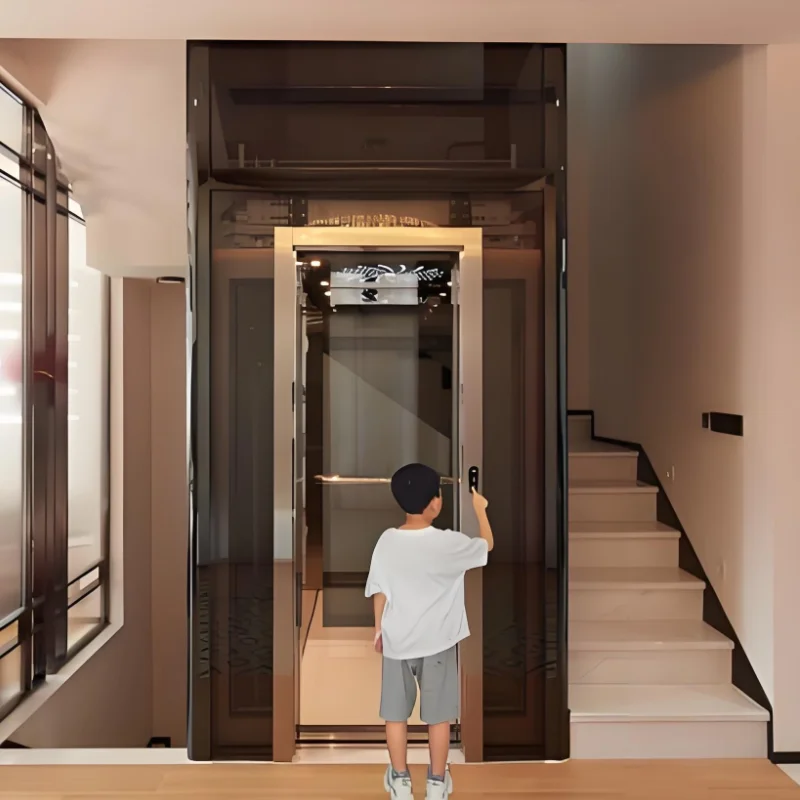
Understanding home elevator costs is one of the most important steps for any homeowner planning a
residential upgrade, accessibility improvement, or luxury renovation. A home elevator can add convenience, long-term
value, and mobility support, but the total investment can vary widely based on elevator type, design, installation
conditions, building requirements, and optional features. For anyone researching house elevator prices,
Residential Elevator installation cost, or the cost to install a home elevator, it helps
to understand the full range of factors that affect the final budget.
This guide explains the major cost drivers, common elevator specifications, typical pricing structures, and the
long-term ownership considerations that influence your overall investment. The goal is to provide clear,
search-friendly, and industry-focused information for homeowners, builders, architects, and property planners who
want accurate, practical insight into home lift cost and residential elevator pricing.
A home elevator is a compact vertical transportation system designed for private residences.
Unlike commercial elevators, residential models are typically smaller, simpler to operate, and engineered for lower
traffic volumes. Home elevators are used to improve accessibility, support aging in place, increase convenience
between floors, and enhance property appeal. Depending on the design, they may use hydraulic, traction, pneumatic,
winding drum, or machine-room-less systems.
The term home elevator is often used interchangeably with residential elevator,
house lift, domestic elevator, and private elevator. While these
terms may overlap, the exact configuration, safety requirements, and installation cost can differ based on the system
type and the home structure.
The average home elevator cost can vary significantly depending on size, technology, number of
floors, customization level, and site conditions. In general, homeowners should expect the total project budget to
include equipment, labor, construction, finishing, permits, and sometimes electrical upgrades or structural changes.
The table below gives a broad market overview of common residential elevator costs. These figures
are provided for general informational purposes and may vary by region, local labor market, and project complexity.
| Home Elevator Type | Typical Cost Range | Common Use Case |
|---|---|---|
| Hydraulic home elevator | $30,000 – $60,000+ | Traditional residential use, smooth ride, moderate space requirement |
| Traction home elevator | $35,000 – $70,000+ | Energy-efficient option, multi-floor homes, often quieter operation |
| Pneumatic vacuum elevator | $40,000 – $80,000+ | Modern design, compact footprint, minimal structural modifications |
| Winding drum elevator | $25,000 – $50,000+ | Budget-conscious residential projects, simplified mechanical design |
| Machine-room-less (MRL) residential elevator | $35,000 – $65,000+ | Space-saving installations, clean architectural integration |
| Luxury/custom home elevator | $60,000 – $150,000+ | Premium finishes, unique design, advanced controls, larger cabins |
It is important to note that the listed ranges do not always include every expense. A complete home elevator
installation cost may include engineering, hoistway construction, permits, inspection fees, electrical work,
and interior customization. For this reason, two projects with similar elevator models can still have very different
final budgets.
Several variables determine the final home elevator investment. The most important cost drivers are
outlined below.
The type of elevator mechanism is one of the largest pricing factors. Different technologies require different
mechanical systems, installation methods, and maintenance schedules. Hydraulic systems often offer a classic
residential solution with a smooth ride, while traction systems may provide better energy efficiency. Pneumatic
elevators are often chosen for visual appeal and compact design, but they can have higher equipment costs.
The more stops a home elevator serves, the more it generally costs. A single-stop system is usually less expensive
than a two-, three-, or four-stop residential elevator because additional floor access requires more rails, doors,
wiring, labor, and structural adjustments. Multi-story homes often need more complex engineering and longer
installation timelines.
Installation in a new build is usually easier and more cost-effective than retrofitting an existing house.
In an existing residence, contractors may need to cut through floors, build a shaft, reinforce framing, relocate
utilities, or modify walls. Homes with limited space, unusual layouts, or older construction may require additional
labor and design work, increasing the total residential elevator cost.
Some home elevators require a dedicated shaft or hoistway, while others may use a self-supporting structure.
Building a shaft can be one of the most significant parts of the project budget. Costs may increase if the project
requires masonry, framing, drywall, fire-rated materials, or architectural finishing around the elevator opening.
The drive system affects both purchase price and long-term operating characteristics. Common drive systems include:
hydraulic, traction, vacuum, and winding drum. Each system has different installation requirements, power needs,
noise levels, and maintenance expectations. Choosing the right system often involves balancing initial cost with
convenience and lifecycle value.
Larger cabs and higher load capacities usually cost more. A compact elevator for one or two people will generally
be less expensive than a larger model designed for wheelchair access or multiple passengers. Weight capacity can also
influence motor selection, safety components, and structural support requirements.
Interior finishes can dramatically impact the final budget. Custom wood panels, glass walls, designer lighting,
premium flooring, stainless steel accents, and specialty controls can all increase cost. Homeowners looking for a
luxurious design should expect higher home elevator prices than those selecting standard finishes.
Some home elevators need dedicated circuits, upgraded service panels, or backup systems. If the home’s electrical
system is outdated, additional upgrades may be needed. These changes can add to the total project cost, especially
in older homes where code compliance is part of the installation scope.
Residential elevator projects typically require permits, inspections, and compliance with local building codes.
Requirements differ by region, but these administrative and regulatory steps should always be included in the budget.
In some cases, accessibility or fire safety rules can influence design decisions and installation costs.
Labor costs vary by geographic area. Urban markets often have higher construction and installation rates than rural
areas. The availability of qualified tradespeople can also influence the overall price. In addition, transportation
expenses for equipment delivery and material handling may affect the final quote.
To better understand home elevator installation expenses, it helps to look at the project as a set
of separate cost categories. The table below shows a typical breakdown of where the money may go in a residential
elevator project.
| Cost Category | What It May Include | Budget Impact |
|---|---|---|
| Equipment | Elevator unit, cab, drive system, controls, safety hardware | High |
| Site preparation | Demolition, framing, hoistway prep, floor cutting, structural work | Medium to High |
| Electrical work | Wiring, panel upgrades, dedicated circuits, lighting integration | Medium |
| Finishes | Cab interior, doors, flooring, trim, decorative elements | Low to High |
| Permits and inspections | Municipal permits, code review, inspection fees | Low to Medium |
| Labor and installation | Mechanical assembly, construction labor, commissioning | High |
| Maintenance setup | Initial service plan, warranty coverage, future maintenance readiness | Low to Medium |
The cost of a home elevator can change based on whether it is installed in a new home, a renovation, or a high-end
custom project. Each scenario has its own budget logic.
| Installation Scenario | General Cost Trend | Why It Costs More or Less |
|---|---|---|
| New construction | Lower to moderate | Elevator can be planned into the design from the start |
| Existing home retrofit | Moderate to high | May require demolition, structural changes, and utility relocation |
| Luxury renovation | High | Premium finishes, design integration, and custom engineering |
| Accessibility-focused upgrade | Moderate | May prioritize practical features over decorative upgrades |
| Compact space installation | Moderate to high | Space constraints can raise design and construction complexity |
Home elevators are available in a wide range of technical and design specifications. These specifications influence
both usability and price. The table below highlights common residential elevator features and typical ranges.
| Specification | Typical Range / Options | Cost Influence |
|---|---|---|
| Capacity | 300 to 1,000+ lbs | Higher capacity usually increases equipment and structural cost |
| Cab size | Compact to wheelchair-accessible | Larger cabins need more materials and installation space |
| Number of stops | 2 to 4+ stops | More stops usually increase complexity and cost |
| Speed | Standard residential speeds | Higher performance can require more advanced systems |
| Door type | Sliding, swing, automatic, manual | Automatic doors and premium hardware often cost more |
| Drive system | Hydraulic, traction, pneumatic, drum | Mechanism choice strongly affects initial and maintenance cost |
| Interior finish | Standard, upgraded, luxury, custom | Custom detailing can significantly raise the price |
| Power source | Standard electrical, upgraded panel, backup options | Electrical upgrades may be required for some installations |
While the investment can be substantial, there are many reasons homeowners choose to install a residential elevator.
Understanding the benefits can help explain why home elevator costs are often seen as a long-term
value decision rather than a short-term expense.
The initial purchase price is only part of the total investment. Long-term ownership also includes energy use,
servicing, repairs, and part replacement. Different elevator technologies have different operating profiles, which
should be considered when evaluating residential elevator costs.
| Elevator Type | Typical Operating Profile | Maintenance Consideration |
|---|---|---|
| Hydraulic | Reliable and smooth, may require fluid-related service | Periodic hydraulic system checks are important |
| Traction | Often energy-efficient and quieter | Requires attention to cables, pulleys, and drive components |
| Pneumatic | Compact and modern, with distinct operating characteristics | Specialized service may be needed for vacuum-related parts |
| Winding drum | Simpler mechanical configuration | Routine mechanical inspection is essential |
| MRL | Space-saving and efficient, suitable for many homes | Modern components may reduce some maintenance needs |
When comparing home elevator installation cost, new construction is typically more cost-effective
than retrofitting an existing home. In a new build, the elevator can be integrated into the architectural design,
making it easier to allocate space, power supply, and structural support from the beginning. This often lowers labor
and modification expenses.
Retrofitting is still very common and often worthwhile, but it usually involves more uncertainty and more site-specific
work. A retrofit may require opening walls, building a shaft, reinforcing floors, or adjusting the layout of a
staircase, closet, or unused room. These factors can increase the final home lift price compared with
a planned new-build installation.
A home elevator is an important part of universal design and accessibility planning. For homeowners who want to stay
in their homes for many years, an elevator can reduce barriers and improve independence. This makes the investment
especially valuable in multi-level homes where stairs may become difficult over time.
Accessibility-focused projects often prioritize reliable performance, simple controls, clear entry space, and
sufficient cab dimensions for wheelchairs or mobility aids. While these requirements may increase cost, they often
improve usability and long-term satisfaction.
In addition to the main pricing drivers, several secondary factors can push the total budget higher:
Homeowners should always request a detailed scope of work when evaluating home elevator costs. A
simplified quote may not include all the hidden or project-specific expenses that appear later during construction.
Asking the right questions can help homeowners compare project proposals more effectively. Useful questions include:
Certain features may increase the upfront cost but improve convenience, safety, and perceived value. These features
are common in many residential elevator systems:
| Feature | Benefit | Potential Cost Impact |
|---|---|---|
| Automatic doors | Improves convenience and accessibility | Moderate to high |
| Emergency communication system | Enhances passenger safety | Low to moderate |
| Backup lowering or emergency operation | Helps during power interruptions | Moderate |
| Glass panels | Creates a modern aesthetic and open feel | Moderate to high |
| Premium lighting | Improves interior appearance and usability | Low to moderate |
| Custom finishes | Matches home interior design | High |
| Smart controls | Offers modern user experience | Moderate |
A home elevator should be evaluated as a long-term asset. Beyond the initial home elevator installation
cost, buyers should consider service intervals, replacement parts, wear and tear, and routine inspections.
Like any mechanical system, elevators perform best when maintained on a regular schedule.
Typical ownership considerations include:
Homeowners who select a durable, well-matched system for their property may benefit from better long-term value and
lower unexpected repair risk. For SEO and user value alike, it is helpful to think of the project as a combination of
home elevator price, installation complexity, and lifecycle cost.
In summary, home elevator costs depend on the elevator type, number of floors, structural
conditions, customization level, and local installation requirements. A simple installation in a new home may be
more affordable, while a custom retrofit in an existing multi-level property can require a much larger budget.
Because each residential project is unique, the most accurate estimate comes from reviewing the specific site,
dimensions, and desired features.
Whether the goal is accessibility, convenience, or luxury enhancement, understanding the key cost factors makes it
easier to plan a realistic budget and compare options effectively. For anyone researching residential
elevator cost, house elevator installation, or home lift investment,
a clear cost breakdown is the best starting point for informed decision-making.
Below are common related search phrases that naturally align with this topic and can help support SEO relevance in
a blog, directory page, or industry landing page:
By using these terms naturally in page titles, headings, image alt text, internal links, and supporting paragraphs,
a website can build stronger topical relevance for search engines while still providing useful, original information
for readers.
```
เว็บไซต์นี้ใช้คุกกี้เพื่อให้แน่ใจว่าคุณได้รับประสบการณ์ที่ดีที่สุดบนเว็บไซต์ของเรา
 English
 Indonesia
 Tiếng Việt
 Filipino



 โทรศัพท์
ความคิดเห็น
(0)